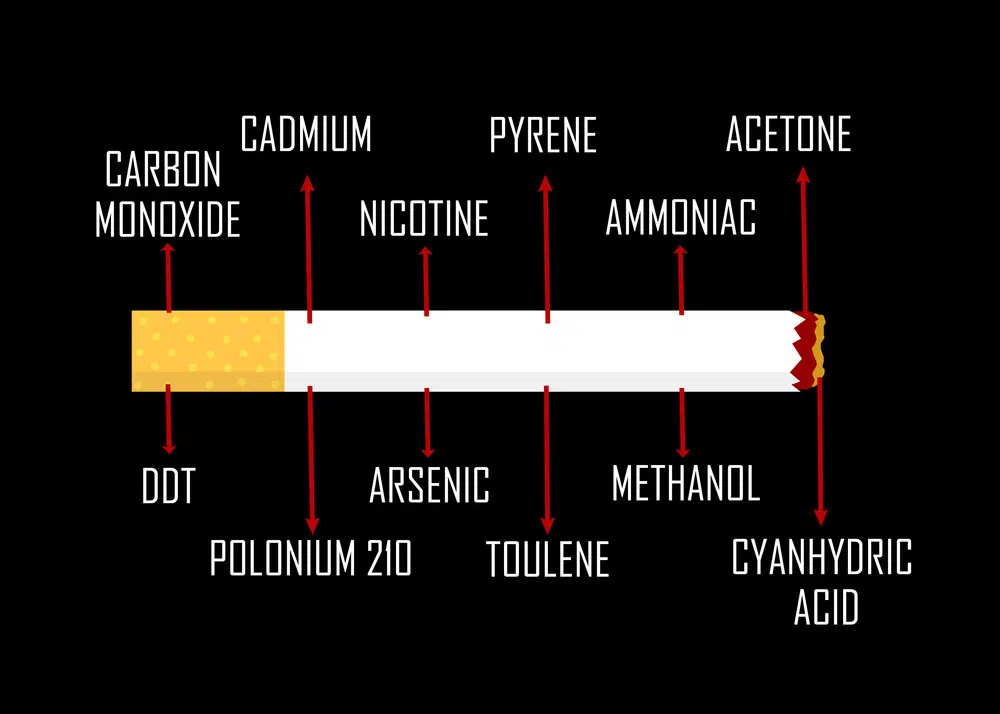
The harmful components of cigarettes and their impact on health
Cigarettes are composed of natural substances found in tobacco alongside a range of toxic chemicals released during burning. Additionally, manufacturers incorporate synthetic additives to heighten the smoking experience. This combination significantly amplifies the health risks associated with smoking, contributing to preventable diseases that place an immense burden on South Africa’s healthcare system.
Chemicals naturally found in tobacco
Nicotine
Nicotine is the most well-known compound in tobacco and the leading cause of addiction. While it is not inherently harmful in small amounts, nicotine impacts the brain by stimulating specific receptors in the nervous system, leading to dependency. Tobacco companies have historically increased nicotine concentrations in cigarettes to intensify addiction levels among consumers.
Arsenic
Arsenic is a highly toxic substance often used in pesticides. Although it is not naturally found in tobacco plants, chemical treatments during cultivation can contaminate the leaves. The toxic effects of arsenic on the human body are well-documented, and it is recognised as a significant contributor to cancer and organ damage.
Chemicals released during tobacco combustion
When a cigarette burns, it undergoes complex chemical reactions that convert its components into harmful substances. The resulting smoke contains a combination of highly toxic and cancer-causing compounds, many of which pose significant risks to human health.
Ammonia
Ammonia, a substance commonly found in cleaning products, is also present in cigarette smoke. It irritates the respiratory system and enhances nicotine absorption, increasing the risk of addiction.
Benzene
Benzene, a volatile organic compound commonly found in petrol and certain adhesives, is also released when tobacco burns. This chemical penetrates cells, causing DNA damage and significantly raising the risk of developing cancer.
A national guarantee
laserOstop® centres provide free support nationwide across South Africa.
Practitioners at your service
Customer support is available for you 6 days a week.
Without side effects
The laserOstop® method is a personalized protocol tailored to each individual and has no side effects.
Discretion and confidentiality
All our laserOstop® centres are dedicated to ensuring the confidentiality of our treatments, safeguarding your privacy and integrity.
Cadmium
Cadmium is a heavy metal commonly used in batteries and industrial coatings. When inhaled through smoking, it causes significant lung damage, discoloured teeth, and a reduced sense of taste and smell. Smoking also releases other harmful metals, including chromium, beryllium, and bromine, all of which pose serious health risks.
Hydrogen Cyanide
Hydrogen cyanide, commonly associated with pesticides, is also a harmful component of cigarette smoke. When inhaled, it can severely damage the respiratory system, impair lung function, and elevate the risk of bronchial infections. These effects contribute to the significant health burden of smoking-related diseases in South Africa.
Formaldehyde
Formaldehyde, commonly referred to as formalin, is a recognised carcinogen. It is strongly linked to leukemia and other cancers affecting the blood. Formaldehyde exposure is a significant public health concern, particularly in industries where it is used in high concentrations, such as manufacturing, textiles, and embalming. South African workers in these sectors may face increased risks, highlighting the need for stringent workplace safety regulations and awareness campaigns to minimise exposure.
Tar
Tar, a black, sticky substance primarily known for its role in paving South African roads, is also a harmful component of tobacco smoke. When inhaled, it coats the delicate tissues of the lungs, disrupting the exchange of oxygen and causing irreversible damage. For smokers, tar significantly contributes to yellow-stained teeth, deteriorating oral health, and a higher risk of respiratory diseases.
Carbon Monoxide
Carbon monoxide, a toxic gas that disrupts oxygen transportation in the bloodstream, is one of the most harmful substances found in cigarette smoke. It worsens cardiovascular issues, impairs brain and muscle function, and poses severe risks to fetal health during pregnancy. In South Africa, where smoking-related illnesses contribute significantly to public health challenges, addressing the dangers of carbon monoxide exposure is critical, especially for vulnerable groups such as pregnant women and individuals with pre-existing heart conditions.
Nitrogen Oxides
Nitrogen oxides, which are commonly linked to greenhouse gases, are also found in cigarette smoke. These harmful chemicals irritate the respiratory system and play a significant role in the gradual decline of lung function observed in smokers. In South Africa, where tobacco use remains a public health concern, addressing the impact of these toxins is critical to improving overall health outcomes.
Manufacturer-added chemicals
To improve taste, minimise irritation, and increase shelf life, cigarette manufacturers incorporate artificial chemicals into their products. These additives are designed to enhance the “enjoyment” of smoking, while also heightening dependency. When exposed to the extreme heat of burning, these chemicals create additional toxic compounds, which significantly elevate health risks for smokers.
Stop the chemicals: Quit smoking
Every cigarette introduces roughly 50 toxic substances into your body. These harmful chemicals not only damage your own health but also put those around you at risk through exposure to second-hand smoke. In South Africa, tobacco use remains a leading cause of preventable deaths, with over 42,100 deaths annually linked to smoking-related diseases such as cancer, heart disease, and respiratory illnesses (source).
Quitting smoking is the only way to eliminate these risks. Breaking free from the cycle of continuous intoxication is essential to prevent irreversible harm to your body. Take the first step today for a healthier, smoke-free future for yourself and for those you care about.
Why choose the laserOstop® method in South Africa?
LaserOstop® is a cutting-edge and widely trusted solution for smoking cessation in South Africa. It has garnered exceptional reviews from satisfied clients, as evident in the glowing testimonials on Google. This method provides a modern alternative to traditional techniques like hypnosis, acupuncture, and nicotine replacement therapy, which typically achieve success rates of only about 40%.
How it works
The laserOstop® method leverages advanced laser technology to target specific points on the ear. This process helps reduce nicotine cravings and supports individuals through the cessation journey. Key benefits of the method include:
- Non-invasive: No needles, medications, or intrusive procedures are involved.
- Side effect-free: Unlike nicotine replacements, laserOstop® does not lead to weight gain or withdrawal symptoms.
- Efficient: Many clients achieve success in just one session.
Proven results
LaserOstop® has an exceptional success rate among South African clients, with the majority achieving long-term cessation after their first session. This method is perfect for individuals seeking a fast, sustainable way to quit smoking. Thousands of satisfied clients have shared positive feedback, highlighting its effectiveness in helping them lead smoke-free lives.
Where to access laserOstop® centres in South Africa ?
LaserOstop® centres are available in various locations worldwide, including South Africa, where these specialized centres are dedicated to helping individuals quit smoking and reclaim their health.
By quitting smoking, you drastically lower your chances of developing severe health issues, such as cancer, cardiovascular disease, and chronic respiratory conditions. Take control of your health schedule your session today and begin your journey to a healthier, smoke-free life.